![[syndicated profile]](https://www.dreamwidth.org/img/silk/identity/feed.png)
![[community profile]](https://www.dreamwidth.org/img/silk/identity/community.png)

Sunday, February 8th, 2026 09:31 pm
Sunday, February 8th, 2026 08:07 pm
I started collecting these decades ago. Amazing how apt many are and from people who have been dead decades, if not centuries.
* * * * *
Conservatism consists of exactly one proposition: There must be in-groups whom the law protects but does not bind, alongside out-groups whom the law binds but does not protect. -Frank Wilhoit
They are dismantling the sleeping middle class. More and more people are becoming poor. We are their cattle. We are being bred for slavery. -They Live (movie), 1989
We are each entitled to our own opinion, but no one is entitled to his own facts. -- Patrick Moynihan
The problem in our country isn't with books being banned, but with people no longer reading. You don't have to burn books to destroy a culture. Just get people to stop reading them. -- Ray Bradbury
The hands that help are better far than the lips that pray. -- Robert G. Ingersoll
We all live in a state of ambitious poverty. -- Decimus Junius Juvenalis
Many more under the cut...
( Read more... )
Conservatism consists of exactly one proposition: There must be in-groups whom the law protects but does not bind, alongside out-groups whom the law binds but does not protect. -Frank Wilhoit
They are dismantling the sleeping middle class. More and more people are becoming poor. We are their cattle. We are being bred for slavery. -They Live (movie), 1989
We are each entitled to our own opinion, but no one is entitled to his own facts. -- Patrick Moynihan
The problem in our country isn't with books being banned, but with people no longer reading. You don't have to burn books to destroy a culture. Just get people to stop reading them. -- Ray Bradbury
The hands that help are better far than the lips that pray. -- Robert G. Ingersoll
We all live in a state of ambitious poverty. -- Decimus Junius Juvenalis
Many more under the cut...
( Read more... )
Tags:
Sunday, February 8th, 2026 07:21 pm
Sunday, February 8th, 2026 09:10 pm
By sheer coincidence, I ended up reading Alix Harrow's The Everlasting almost immediately after The Isle in the Silver Sea. Both books are ringing changes on the same big themes -- the narratives of nationalism, fate and tragedy, Spenser and Malory, depressed lady knights and evil girlbosses -- and from what I had previously read of both Harrow and Suri's work I was tbh quite surprised to find myself liking The Everlasting a bit better.
The premise of The Everlasting: it's more or less the second-world equivalent of the 1920s and we have just had a Big War. Our protagonist Owen has a radical pacifist alcoholic father that he doesn't respect, a war medal that he didn't really earn, a academic career that doesn't seem to be going places, and a face that makes it pretty obvious that at least one parent came from The Other Side. However, his messy relationship with the war has not in any way altered his ardent passion for the greatest figure of his country's nationalist mythology, the knight Una Everlasting, who fought at the side of the nation's founding queen a thousand years ago and died tragically to bring the country stability.
Then he finds a book that purports to be the True History of Una Everlasting, and gets summoned to a secret meeting with the country's minister of war, an evil girlboss who immediately sends him back in time to experience and document Una Everlasting's Last Quest first hand. He gets to write the nationalist myth himself! What fun!
Alas, it turns out that the great knight Una Everlasting is violent, brutal, and extremely burned out about all the people she's killed as part of the bloody process of nation-forging: at this point the citizens think of her as a butcher and she's inclined to agree. Nonetheless, fanboy Owen convinces her to take on this one last quest for the sake of her honor & kingdom & legacy &cetera, with the promise of peace at the end of it, knowing full well that the end of the quest will in fact mean her death.
This is the first section of the book and tbh I enjoyed it enormously. Owen is writing the narrative in first person and his voice is used to great effect: he's a twisted-up and self-contradictory character who shows the problems of nationalism much better as a guy who's genuinely trying to convince himself that he believes in it than he would if he started out already enlightened. I love his embarrassing radical pacifist dad and his judgmental thesis advisor, and, as heterosexualities go, I am absolutely not immune to the allure of large violent depressed woman/weaselly little worm man whom she could easily break in two who is obsessed with her but also fundamentally betraying her. If the book had ended at the end of its first section, I think it would have been a phenomenal standalone novella.
However, the book does keep going. I continued to have a good time, more or less, but the more it went on the more I felt that it had sort of overplayed its hand. Alix Harrow is extremely a Power of Fiction author in ways that didn't fully work for me in the other book of hers I read; I do appreciate that this book is the Power of Fiction [derogatory] but I still think that perhaps she is giving fiction a little too much power ... For the length of ninety pages I was willing to role with the importance of The Great Nationalist Myth, but the longer it went on and the deeper and more recursive it got with its timeloops the more I was like 'wait .... we only have one founding myth? changing the myth really directly and immediately impacts the future in predictable and manipulable ways and is in fact the only thing that does so? Hmm. Well."
Also I enjoyed the evil girlboss right up until it was revealed that every evil girlboss in the country's whole thousand-year-old history had been the very self-same evil girlboss and no other woman had ever done anything. You are telling me you have built up a whole thing about this country's founding myth of the Queen And Her Lady Knight from scratch and that didn't change the country's relationship to gender at all? NO other woman was ever inspired to do anything with that? I am not sure that's as feminist as you think it is ...
Anyway, I do think this book and The Island In the Silver Sea form a sort of spiritual duology and I'm glad to have read them back to back: for such similar books they have really interestingly different flaws and virtues.
The premise of The Everlasting: it's more or less the second-world equivalent of the 1920s and we have just had a Big War. Our protagonist Owen has a radical pacifist alcoholic father that he doesn't respect, a war medal that he didn't really earn, a academic career that doesn't seem to be going places, and a face that makes it pretty obvious that at least one parent came from The Other Side. However, his messy relationship with the war has not in any way altered his ardent passion for the greatest figure of his country's nationalist mythology, the knight Una Everlasting, who fought at the side of the nation's founding queen a thousand years ago and died tragically to bring the country stability.
Then he finds a book that purports to be the True History of Una Everlasting, and gets summoned to a secret meeting with the country's minister of war, an evil girlboss who immediately sends him back in time to experience and document Una Everlasting's Last Quest first hand. He gets to write the nationalist myth himself! What fun!
Alas, it turns out that the great knight Una Everlasting is violent, brutal, and extremely burned out about all the people she's killed as part of the bloody process of nation-forging: at this point the citizens think of her as a butcher and she's inclined to agree. Nonetheless, fanboy Owen convinces her to take on this one last quest for the sake of her honor & kingdom & legacy &cetera, with the promise of peace at the end of it, knowing full well that the end of the quest will in fact mean her death.
This is the first section of the book and tbh I enjoyed it enormously. Owen is writing the narrative in first person and his voice is used to great effect: he's a twisted-up and self-contradictory character who shows the problems of nationalism much better as a guy who's genuinely trying to convince himself that he believes in it than he would if he started out already enlightened. I love his embarrassing radical pacifist dad and his judgmental thesis advisor, and, as heterosexualities go, I am absolutely not immune to the allure of large violent depressed woman/weaselly little worm man whom she could easily break in two who is obsessed with her but also fundamentally betraying her. If the book had ended at the end of its first section, I think it would have been a phenomenal standalone novella.
However, the book does keep going. I continued to have a good time, more or less, but the more it went on the more I felt that it had sort of overplayed its hand. Alix Harrow is extremely a Power of Fiction author in ways that didn't fully work for me in the other book of hers I read; I do appreciate that this book is the Power of Fiction [derogatory] but I still think that perhaps she is giving fiction a little too much power ... For the length of ninety pages I was willing to role with the importance of The Great Nationalist Myth, but the longer it went on and the deeper and more recursive it got with its timeloops the more I was like 'wait .... we only have one founding myth? changing the myth really directly and immediately impacts the future in predictable and manipulable ways and is in fact the only thing that does so? Hmm. Well."
Also I enjoyed the evil girlboss right up until it was revealed that every evil girlboss in the country's whole thousand-year-old history had been the very self-same evil girlboss and no other woman had ever done anything. You are telling me you have built up a whole thing about this country's founding myth of the Queen And Her Lady Knight from scratch and that didn't change the country's relationship to gender at all? NO other woman was ever inspired to do anything with that? I am not sure that's as feminist as you think it is ...
Anyway, I do think this book and The Island In the Silver Sea form a sort of spiritual duology and I'm glad to have read them back to back: for such similar books they have really interestingly different flaws and virtues.
Sunday, February 8th, 2026 09:50 pm
Another 4 inches of snow? And high winds? And "arctic chill"? I cannot.
I am trying the applesauce loaf again, this time with some chunks of "Gold Rush" apples in the batter and making sure not to use lumpy brown sugar. Fingers crossed.
Amtrak's 2FA system is garbage and I may have to contend with Julie, my nemesis (Amtrak's phone customer "service" bot) to get to New York to see Dessa in March (and sneak out of a conference early); my splurge on Restaurant Week was kind of a waste of money (pasta oversalted, rosé weirdly bland); I am sick of all my clothes, no doubt because I have been wearing all of them at the same time for the past month, and the idea of acquiring different clothes is the epitome of exchanging money for bads and disservices.
THIS IS THE BAD PLACE.
Sunday, February 8th, 2026 05:50 pm
My aunt played chello, she was in a choir, and she is the person who let me understand I could just go see live music as a human if I wanted to.
Since she died I've had a relatively short playlist going a lot, one that I can sing along with. It helps.
Her fb eulogy was written by someone who clearly knew her. It said "she died as she lived, with courage and grace, uncompromisingly upholding her values of compassion and community"
Yeah. She did.
Since she died I've had a relatively short playlist going a lot, one that I can sing along with. It helps.
Her fb eulogy was written by someone who clearly knew her. It said "she died as she lived, with courage and grace, uncompromisingly upholding her values of compassion and community"
Yeah. She did.
Tags:
Sunday, February 8th, 2026 04:08 pm
Poachers turned rangers, complicity in tyranny, the colors of marble, bears > Bigfoot, For All Mankind
Francis Annagu’s “How Former Poachers are Protecting Nigeria’s Vanishing Rainforest” explores the lines of tension, conflict, and resolution in taking a conservation approach to a multiuse ecosystem. Buried deep in the heart of this article is one way—probably the most effective way—to turn hunters into rangers: make the latter a more attractive option, especially in terms of pay. That hasn’t answered every challenge, as agriculture and deforestation continue to press on the forest reserve. But that problem isn’t unique to Nigeria, either. Make sure you scroll far enough to see the forest elephants.
Andrea Pitzer—always worth reading—writes in “Love that is Complicit” that whatever our opinions on immigration in the U.S. (my own is that the government has been kicking the can down the road with regard to just, humane, and consistent policy for most of my lifetime), the current situation requires either looking past an awful lot of cruelty to find acceptable, or very carefully not even knowing that there’s something to look at.
In “These Marbles were Never White,” Danai Christopoulou joins a growing number of Greek commentators on the Anglophone world’s ongoing love affair with Greek mythology, in ways that often obscure that mythology’s vibrancy and cultural context. I’m no exception here, as someone who’s called myself a Hellenic polytheist for almost 15 years, and made my own contribution to the body of stories based on Greek myths and legends. Those were my entry points into a deeper appreciation for both modern and ancient Greek culture and language, but Christopoulou’s piece highlights the cost of receiving these stories stripped of their cultural, historical, and linguistic context—which is the way that those of us in the Anglophone sphere tend to receive them. When I visited Greece in 2008, the museum she describes was still under construction. Some years later I visited the British Museum, where the Elgin marbles are still on display—complete with rather defensively worded signage. Hmm.
Jeff VanderMeer’s “Double Take” is the kind of nature writing I’d love to do. Early in his piece on Bigfoot and bears, he says:
I’m zealous about the fact that we don’t need Bigfoot populating the wilderness to find the natural world mysterious and marvelous. The bears often mistaken for cryptids, for example, already exist and capture our imagination for very good reasons.
This right here is why I became a tracker. VanderMeer goes on to discuss what he’s learned about animals from the trail cameras in his yard—contrasting this with purported Bigfoot images on trail cameras in the woods and how none of them seem to reliably be the real deal. One of his interviewees for the article says that if Bigfoot enthusiasts didn’t have Bigfoot, they’d just get into some other conspiracy theory, not into actual nature. Which I think is true, and also sad.
I recently joked that I watch most movies and TV shows months to years after everyone else has already seen them, which is why I only got to the first season of “For All Mankind” in the last few weeks. It’s out on BluRay, and if you have a player, this really is an excellent way to watch it—the gorgeous visuals are shown off to their best effect. The first season takes place beginning in 1969, and they get the tech and attitudes of the period so right, I’d forget I wasn’t watching a documentary (or maybe Apollo 13) until something obviously ahistorical happened. Unfortunately it doesn’t look like the subsequent seasons will get physical disc releases anytime soon, so I may have to pony up for Apple TV if I want more stuff like this.
Francis Annagu’s “How Former Poachers are Protecting Nigeria’s Vanishing Rainforest” explores the lines of tension, conflict, and resolution in taking a conservation approach to a multiuse ecosystem. Buried deep in the heart of this article is one way—probably the most effective way—to turn hunters into rangers: make the latter a more attractive option, especially in terms of pay. That hasn’t answered every challenge, as agriculture and deforestation continue to press on the forest reserve. But that problem isn’t unique to Nigeria, either. Make sure you scroll far enough to see the forest elephants.
Andrea Pitzer—always worth reading—writes in “Love that is Complicit” that whatever our opinions on immigration in the U.S. (my own is that the government has been kicking the can down the road with regard to just, humane, and consistent policy for most of my lifetime), the current situation requires either looking past an awful lot of cruelty to find acceptable, or very carefully not even knowing that there’s something to look at.
In “These Marbles were Never White,” Danai Christopoulou joins a growing number of Greek commentators on the Anglophone world’s ongoing love affair with Greek mythology, in ways that often obscure that mythology’s vibrancy and cultural context. I’m no exception here, as someone who’s called myself a Hellenic polytheist for almost 15 years, and made my own contribution to the body of stories based on Greek myths and legends. Those were my entry points into a deeper appreciation for both modern and ancient Greek culture and language, but Christopoulou’s piece highlights the cost of receiving these stories stripped of their cultural, historical, and linguistic context—which is the way that those of us in the Anglophone sphere tend to receive them. When I visited Greece in 2008, the museum she describes was still under construction. Some years later I visited the British Museum, where the Elgin marbles are still on display—complete with rather defensively worded signage. Hmm.
Jeff VanderMeer’s “Double Take” is the kind of nature writing I’d love to do. Early in his piece on Bigfoot and bears, he says:
I’m zealous about the fact that we don’t need Bigfoot populating the wilderness to find the natural world mysterious and marvelous. The bears often mistaken for cryptids, for example, already exist and capture our imagination for very good reasons.
This right here is why I became a tracker. VanderMeer goes on to discuss what he’s learned about animals from the trail cameras in his yard—contrasting this with purported Bigfoot images on trail cameras in the woods and how none of them seem to reliably be the real deal. One of his interviewees for the article says that if Bigfoot enthusiasts didn’t have Bigfoot, they’d just get into some other conspiracy theory, not into actual nature. Which I think is true, and also sad.
I recently joked that I watch most movies and TV shows months to years after everyone else has already seen them, which is why I only got to the first season of “For All Mankind” in the last few weeks. It’s out on BluRay, and if you have a player, this really is an excellent way to watch it—the gorgeous visuals are shown off to their best effect. The first season takes place beginning in 1969, and they get the tech and attitudes of the period so right, I’d forget I wasn’t watching a documentary (or maybe Apollo 13) until something obviously ahistorical happened. Unfortunately it doesn’t look like the subsequent seasons will get physical disc releases anytime soon, so I may have to pony up for Apple TV if I want more stuff like this.

Tags:
Sunday, February 8th, 2026 04:05 pm
I haven’t worked in libraries since 2023, but I still follow that world closely enough to learn this week that Fobazi Ettarh had passed away.
Though I never met her, seeing the outpouring of support and good memories across library social media is a testament to both her influence and the library community at its best. Before and after DEI became a political target, and then a political hot potato, she was doing the hard work: addressing longstanding inequities and biases present in a profession that likes to pride itself on inclusiveness.
She’s probably best known for her article “Vocational Awe and Librarianship: The Lies We Tell Ourselves,” which appeared in the journal In the Library with the Lead Pipe (best journal title ever btw) in 2018. Librarianship isn’t the only field subject to vocational awe, of course, and friends and acquaintances who work in other such fields have always understood exactly what the term means without having to be told. But here’s Ettarh’s definition:
Vocational awe describes the set of ideas, values, and assumptions librarians have about themselves and the profession that result in notions that libraries as institutions are inherently good, sacred notions, and therefore beyond critique. I argue that the concept of vocational awe directly correlates to problems within librarianship like burnout and low salary. This article aims to describe the phenomenon and its effects on library philosophies and practices so that they may be recognized and deconstructed.
Correlative to this is that the people working in such fields are supposed to feel so lucky to be doing such important work that they won’t complain about things like low pay, mission creep, unrealistic expectations, or outright abuse.
I left librarianship in 2023. I can’t say that I’ll never return, and vocational awe was only one part of why I left. But Ettarh’s work, both that article and subsequent, helped me to understand something important about vocation, a piece that had been missing in my thinking up until then. Most of my career in librarianship was spent at an ELCA-affiliated liberal arts university, where I learned a great deal about Lutheran Protestantism beyond the fact that it existed. (I grew up Catholic.) Among other things, this idea of vocation: of finding and pursuing your life’s fulfillment.
It’s an attractive idea, one by no means limited to Lutherans. But part of vocational discernment has to be understanding vocational context. Vocational awe obscures that discernment, making it possible to walk past or tolerate all sorts of issues that ought to be confronted.
Ettarh’s work was about libraries and librarianship, specifically, but it’s applicable to so much more. As someone who’s drawn to what one might call “do-gooder” work—since retiring from librarianship I’ve focused my volunteer work on conservation, a field that literally could not exist without countless hours of volunteer labor—Ettarh’s scholarship reminds me to be intentional about what sacrifices I make and where I need to draw the line, and not only for myself.
Though I never met her, seeing the outpouring of support and good memories across library social media is a testament to both her influence and the library community at its best. Before and after DEI became a political target, and then a political hot potato, she was doing the hard work: addressing longstanding inequities and biases present in a profession that likes to pride itself on inclusiveness.
She’s probably best known for her article “Vocational Awe and Librarianship: The Lies We Tell Ourselves,” which appeared in the journal In the Library with the Lead Pipe (best journal title ever btw) in 2018. Librarianship isn’t the only field subject to vocational awe, of course, and friends and acquaintances who work in other such fields have always understood exactly what the term means without having to be told. But here’s Ettarh’s definition:
Vocational awe describes the set of ideas, values, and assumptions librarians have about themselves and the profession that result in notions that libraries as institutions are inherently good, sacred notions, and therefore beyond critique. I argue that the concept of vocational awe directly correlates to problems within librarianship like burnout and low salary. This article aims to describe the phenomenon and its effects on library philosophies and practices so that they may be recognized and deconstructed.
Correlative to this is that the people working in such fields are supposed to feel so lucky to be doing such important work that they won’t complain about things like low pay, mission creep, unrealistic expectations, or outright abuse.
I left librarianship in 2023. I can’t say that I’ll never return, and vocational awe was only one part of why I left. But Ettarh’s work, both that article and subsequent, helped me to understand something important about vocation, a piece that had been missing in my thinking up until then. Most of my career in librarianship was spent at an ELCA-affiliated liberal arts university, where I learned a great deal about Lutheran Protestantism beyond the fact that it existed. (I grew up Catholic.) Among other things, this idea of vocation: of finding and pursuing your life’s fulfillment.
It’s an attractive idea, one by no means limited to Lutherans. But part of vocational discernment has to be understanding vocational context. Vocational awe obscures that discernment, making it possible to walk past or tolerate all sorts of issues that ought to be confronted.
Ettarh’s work was about libraries and librarianship, specifically, but it’s applicable to so much more. As someone who’s drawn to what one might call “do-gooder” work—since retiring from librarianship I’ve focused my volunteer work on conservation, a field that literally could not exist without countless hours of volunteer labor—Ettarh’s scholarship reminds me to be intentional about what sacrifices I make and where I need to draw the line, and not only for myself.
Sunday, February 8th, 2026 02:50 pm
The second, longer run of prednisone seems to have restored most if not all of the jaw mobility (yay for being able to eat bagels again) but it also has given me some fairly impressive insomnia.
( details )
The other thing of note this week is finally getting into the dermatologist for the Suspicious Blob on my ear. I forget when I first noticed it, and I'm pretty sure I brought it up to my main doctor several times, but she thought it was just benign. But it's been growing, and then in December it got randomly bleedy, and my audiologist sent a note to my doctor about "a lesion on the ear".
Dermatologist (who is awesome I love her) agreed it looked sus, and chopped it off. (The blob, not the ear.) Top edge of ear is awkward to bandaid, but if you do it right with the right shape bandage you can get an elf ear effect, woo.
Pathology came back as basal cell carcinoma, which I had a spot of on my nose in 2016. BSC is one of the least scary types of cancer: slow moving, easy to treat if you get it early, and nowhere near as scary as melanoma. (And 'treat' is generally just an outpatient surgical procedure, no radiation or chemo.) I'll be having a Mohs surgery in a bit over a month to make sure all the cancer cells got removed, and I'm not really worried.
...except for the bit where I have to get up at at least 6am, eww.
( details )
The other thing of note this week is finally getting into the dermatologist for the Suspicious Blob on my ear. I forget when I first noticed it, and I'm pretty sure I brought it up to my main doctor several times, but she thought it was just benign. But it's been growing, and then in December it got randomly bleedy, and my audiologist sent a note to my doctor about "a lesion on the ear".
Dermatologist (who is awesome I love her) agreed it looked sus, and chopped it off. (The blob, not the ear.) Top edge of ear is awkward to bandaid, but if you do it right with the right shape bandage you can get an elf ear effect, woo.
Pathology came back as basal cell carcinoma, which I had a spot of on my nose in 2016. BSC is one of the least scary types of cancer: slow moving, easy to treat if you get it early, and nowhere near as scary as melanoma. (And 'treat' is generally just an outpatient surgical procedure, no radiation or chemo.) I'll be having a Mohs surgery in a bit over a month to make sure all the cancer cells got removed, and I'm not really worried.
...except for the bit where I have to get up at at least 6am, eww.
Sunday, February 8th, 2026 10:38 pm
Reading. I have FINISHED Index, A History of the (Dennis Duncan), including both indexes, including The Games Therein, and had a Great time.
Started (just now) The Rose Field, volume three of The Book of Dust (Philip Pullman). ( Grousing; vague spoilers for vol 2 )
so as I say I'm not hugely hopeful for this, but hey, maybe I'm being unfair to it.Writing. Did you know that getting knowledge out of your own head and into other people's is a specific set of skills that has very little to do with how well you know the things you're trying to communicate? TRY TO LOOK SHOCKED, PLEASE. (6.3k words, and am absolutely in an Iterative Cycle of trying to make the introduction more-or-less work. It is progressing, just... very slowly.)
Listening. I realised that Hidden Almanac was possibly in fact exactly a useful sort of thing to listen to while Wrangling Laundry, and have therefore started again from the beginning, at least in part as an attempt to actually listen to some of the episodes I dozed through while they were playing in the car...
Playing. Incomplete White Puzzle progresses. (Today I have added I think three pieces to the contiguous section, two of which I had already joined to each other as a free-foating lump, and made another couple of free-floating lump connections.)
I think we also did a bit more Inkulinati before I got horrendously distracted by Puzzle. And the sudoku fixation continues, though it is at least ramping down a little.
Cooking. I have been having A Rough Week brain-wise, but I have today managed to make some bread, and I did earlier in the week gently fry up some celery and garlic to add to the mashed potato & parsnip that we were having with Vegetables and Veg Sossij. I think that is about the extent of it.
Eating. VEGETABLES, including a couple of peppers from an overwintered plant. (Restricted diet for a week up until the Tuesday just gone, so the return of Fibre was Extremely Welcome.) Favourite chocolate stars with raspberries. Fruit With Skin On. Lebkuchen. Stollen. Seeds and nuts.
Growing. I think the nematodes (applied as a split dose a few days apart) have dealt? at least temporarily? with the sodding Sciarid Flies? for now?
Lemongrass needs pricking out. Physalis are showing zero indication that they have any intention of germinating, which is mildly annoying. There are still three not-dead Lithops seedlings, though I doubt they're the same three as last week. Orchids getting increasingly enthusiastic about their plans to flower.
Have not managed to get anything else sown, yet.
Observing. Lots of bulbs: daffodils and crocuses various and snowdrops are Definitely Underway, at this point. We are fairly convinced that the Yelling from the garden around dusk is Amorous Foxes, though we have not (yet?) bestirred ourselves to ask the internet if what we think we're hearing is in fact what we're hearing...
Tags:
Sunday, February 8th, 2026 04:38 pm
AO3 Link | Long Distance Force Calls (842 words) by Merfilly
Chapters: 1/1
Fandom: Star Wars: Rebels
Rating: General Audiences
Warnings: No Archive Warnings Apply
Relationships: Darth Vader & Ahsoka Tano
Characters: Darth Vader, Ahsoka Tano
Additional Tags: Telepathy, Force Bond
Summary:
The first time her meditations took her deep enough that the lock slipped from the training bond, Ahsoka almost metaphorically ran away and slammed the gate shut. She was still on the run, still trying to figure out where she could belong that would make a difference, and there was this swirling storm of rage and pain.
Before she could, he took notice of her, and for a moment, she felt him push the anger away to hold on to her as something of his own.
~You left me.~ The accusation burned blue-white in her mind, as the anger rose higher than the possessive love.
~I would be dead if I hadn't and you know it,~ she shot back, but there was a piece of her that did feel the guilt of the galaxy burning down because of her choice.
~I could have protected you!~
~Really, Skyguy?~ She deliberately let him see as she stood looking over the markers made for the 332nd.
It was him that closed her out … after she tasted his own sense of failure to those that had trusted them both.
She had not been meditating that deeply when she knew that he was touching her mind. The whirls of anger were almost steadying, given how enraged she'd been by the Alliance ignoring her advice. They would not do so again — but too many had paid the price.
She locked that, all of her other activities, deep inside, protecting them behind shields he could not penetrate. That the anger was tied so deeply to pain, unending pain, was a moment's curiosity before she acknowledged him in her mind.
~Snooping on me, Skyguy?~
~Your irreverence only grows,~ and the voice was far more resonant, deeper, carrying a darker flare than ever, but she thought there was something desperate in how it sounded.
~Did they all die?~
She hissed in a breath, needing to protect those few men she knew to be free of the Empire, the ones safe from the nightmare… and grieving for all those she had not been able to save.
~If, Apprentice, you should find others, they still age.~
Her hesitation to tell him made those words come across as cold as space, and yet, even as he left her alone in her mind, she noted he had told her the important part. Somewhere, deep inside the man that had become her worst nightmare, he still cared about the men. And she would see what she could do to fix it, another testament of who they had been, when they had been together, protecting the men.
She was injured, almost to the point of needing trance to hold it at bay until her operatives made the pick up.
She didn't want to risk being that vulnerable, even as she reached for the fury-laced-with-pain that smoldered in the corner of her psyche.
~You are hurt.~
The surprise, followed by almost overwhelming anger directed at whatever had harmed her was almost touching, but Ahsoka had to keep that away from her heart. She brought her irreverence to her own defense.
~You are always in pain, Skyguy. Surprised your handler didn't get that fixed.~
That was better, a sharp spike in the anger, the deeper presence of darkness — it helped her maintain the illusion that they could never be anything but enemies now, even as neither of them severed their bond.
~There was not much of me to heal,~ being the next honest thought set Ahsoka back on her proverbial heels.
~Ultimate power, with access to a master cloning world, and he couldn't get you body parts cloned? Organs? Whatever it is that you need to not be… like this? Skyguy, your contract with this guy is worse than mucking eopi stalls.~
She didn't expect him to hold onto the link after that.
~Perhaps. But there is no alternative.~
Those words, contemplative, almost calm, sent a chill down Ahsoka's spine, but before she could think her way to a witty comeback, he locked her out again.
~There have been a number of times I thought you were a figment of my imagination.~
That calm entry into her mind, backdropped against the abyss of ever-present pain, set Ahsoka on edge. They'd been entirely too close in physical space this day.
~I wish I had words to convince you that we could make a better reality than what we have.~
She kept it to a surface emotion of wishfulness, holding back every other emotion that had surged in her soul during the near encounter.
~Wishes have never been a good plan of attack, Apprentice.~
She closed her eyes, gave him her regrets for the past, and locked him out of her mind, shoring up her shields against the man she missed, that still existed in a monster that had destroyed everything resembling peace.
Here they were, face to face…
…and even all the moments of the years apart that had led to words and emotions shared, they both knew.
Today, what they had been would either be destroyed forever —
— or reforged.
Chapters: 1/1
Fandom: Star Wars: Rebels
Rating: General Audiences
Warnings: No Archive Warnings Apply
Relationships: Darth Vader & Ahsoka Tano
Characters: Darth Vader, Ahsoka Tano
Additional Tags: Telepathy, Force Bond
Summary:
They never severed the bond...
Long Distance Force Calls
The first time her meditations took her deep enough that the lock slipped from the training bond, Ahsoka almost metaphorically ran away and slammed the gate shut. She was still on the run, still trying to figure out where she could belong that would make a difference, and there was this swirling storm of rage and pain.
Before she could, he took notice of her, and for a moment, she felt him push the anger away to hold on to her as something of his own.
~You left me.~ The accusation burned blue-white in her mind, as the anger rose higher than the possessive love.
~I would be dead if I hadn't and you know it,~ she shot back, but there was a piece of her that did feel the guilt of the galaxy burning down because of her choice.
~I could have protected you!~
~Really, Skyguy?~ She deliberately let him see as she stood looking over the markers made for the 332nd.
It was him that closed her out … after she tasted his own sense of failure to those that had trusted them both.
She had not been meditating that deeply when she knew that he was touching her mind. The whirls of anger were almost steadying, given how enraged she'd been by the Alliance ignoring her advice. They would not do so again — but too many had paid the price.
She locked that, all of her other activities, deep inside, protecting them behind shields he could not penetrate. That the anger was tied so deeply to pain, unending pain, was a moment's curiosity before she acknowledged him in her mind.
~Snooping on me, Skyguy?~
~Your irreverence only grows,~ and the voice was far more resonant, deeper, carrying a darker flare than ever, but she thought there was something desperate in how it sounded.
~Did they all die?~
She hissed in a breath, needing to protect those few men she knew to be free of the Empire, the ones safe from the nightmare… and grieving for all those she had not been able to save.
~If, Apprentice, you should find others, they still age.~
Her hesitation to tell him made those words come across as cold as space, and yet, even as he left her alone in her mind, she noted he had told her the important part. Somewhere, deep inside the man that had become her worst nightmare, he still cared about the men. And she would see what she could do to fix it, another testament of who they had been, when they had been together, protecting the men.
She was injured, almost to the point of needing trance to hold it at bay until her operatives made the pick up.
She didn't want to risk being that vulnerable, even as she reached for the fury-laced-with-pain that smoldered in the corner of her psyche.
~You are hurt.~
The surprise, followed by almost overwhelming anger directed at whatever had harmed her was almost touching, but Ahsoka had to keep that away from her heart. She brought her irreverence to her own defense.
~You are always in pain, Skyguy. Surprised your handler didn't get that fixed.~
That was better, a sharp spike in the anger, the deeper presence of darkness — it helped her maintain the illusion that they could never be anything but enemies now, even as neither of them severed their bond.
~There was not much of me to heal,~ being the next honest thought set Ahsoka back on her proverbial heels.
~Ultimate power, with access to a master cloning world, and he couldn't get you body parts cloned? Organs? Whatever it is that you need to not be… like this? Skyguy, your contract with this guy is worse than mucking eopi stalls.~
She didn't expect him to hold onto the link after that.
~Perhaps. But there is no alternative.~
Those words, contemplative, almost calm, sent a chill down Ahsoka's spine, but before she could think her way to a witty comeback, he locked her out again.
~There have been a number of times I thought you were a figment of my imagination.~
That calm entry into her mind, backdropped against the abyss of ever-present pain, set Ahsoka on edge. They'd been entirely too close in physical space this day.
~I wish I had words to convince you that we could make a better reality than what we have.~
She kept it to a surface emotion of wishfulness, holding back every other emotion that had surged in her soul during the near encounter.
~Wishes have never been a good plan of attack, Apprentice.~
She closed her eyes, gave him her regrets for the past, and locked him out of her mind, shoring up her shields against the man she missed, that still existed in a monster that had destroyed everything resembling peace.
Here they were, face to face…
…and even all the moments of the years apart that had led to words and emotions shared, they both knew.
Today, what they had been would either be destroyed forever —
— or reforged.
Sunday, February 8th, 2026 07:40 pm
The children are playing Roblox* together, and there are many joyous shouts of "I've found a tunnel, go in the yellow one! I'll check the door!" from the next room. Clearly having a lovely time.
*Safe, from my understanding, so long as they talk to nobody and spend no money.
*Safe, from my understanding, so long as they talk to nobody and spend no money.
Tags:
Sunday, February 8th, 2026 05:20 pm
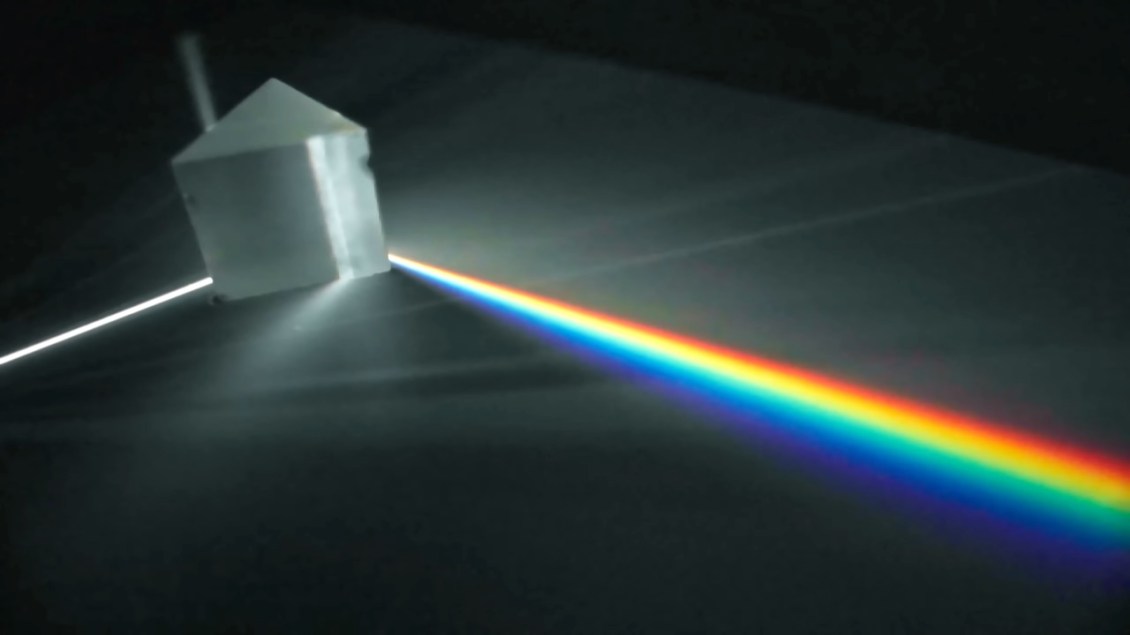
Innovative science essayist and author Steve Mould wondered if he could unbend a rainbow into a beam of white light, using the principles of Sir Isaac Newton‘s prism rainbows. Mould added an additional prism and a convex lens to achieve the reverse. After a few attempts, Mould succeeded, and the reaction was absolutely stunning.
Newton proved that white light was made of all the colours of rainbow by recombining the spectrum. He used a second prism and a convex lens.
subscribe to the Laughing Squid Newsletter
The post How to Unbend a Rainbow Into a Beam of White Light was originally published on Laughing Squid.
Sunday, February 8th, 2026 04:17 pm
Engineer Tom Stanton explored whether the energy captured by a magnetic pendulum swinging over a block of copper could be used as a battery. As he explained, copper is not magnetic, but the motion generates heat that can be converted into electricity.
Here I have a magnet suspended from some string which allows it to swing like a pendulum ….the magnet induces electric currents in the copper and those currents generate their own magnetic field that fights back and slow it down and the magnet’s kinetic energy is converted into heat inside of the copper. But what if instead of wasting that energy as heat, could we capture it to power something?
Stanton built a prototype that he progressively scaled using a number of engineering techniques to power a variety of devices.
Right now, we should scale up this thing and see what else we can power.
via The Awesomer
subscribe to the Laughing Squid Newsletter
The post Building a Magnetic Pendulum That Generates Electricity As It Swings Over Copper was originally published on Laughing Squid.
Sunday, February 8th, 2026 10:32 am
Every week for most of the last 30 years, I have volunteered as an English language partner. Since 2024, I’ve treasured my time with two people who’ve learned English as a foreign language. I get to spend time with people who have weirdly requested that I correct their pronunciation and grammar. It’s a pleasantly zen task: listening carefully then offering precise feedback about a language I love. In return, I’ve enjoyed learning their stories from Chile and Taiwan/Germany/hiking world-wide.
Tags:
Sunday, February 8th, 2026 11:18 am
Fandom: Stargate Atlantis
Pairings/Characters: John Sheppard/Rodney McKay
Rating: Mature
Length: wc 5541
Content Notes No AO3 warning apply
Creator Links: AO3 profile
Theme: Inept in Love
Summary: "We had a fight and he dumped me." Foofy humor.
Reccer's Notes This is a funny and delightful gem that just goes to show you that even when in an established relationship, John and Rodney (esp John) are horribly inept in love.
Link Proof
Pairings/Characters: John Sheppard/Rodney McKay
Rating: Mature
Length: wc 5541
Content Notes No AO3 warning apply
Creator Links: AO3 profile
Theme: Inept in Love
Summary: "We had a fight and he dumped me." Foofy humor.
Reccer's Notes This is a funny and delightful gem that just goes to show you that even when in an established relationship, John and Rodney (esp John) are horribly inept in love.
Link Proof
Sunday, February 8th, 2026 12:00 am


Sunday, February 8th, 2026 02:15 pm
We have a couple of cats, B. and J., who were rescued as kittens. ( Excretory developments. )
Sunday, February 8th, 2026 08:57 am

An assortment of (mostly) SF from just before Asimov's Sputnik-inspired hiatus from SF.
Nine Tomorrows by Isaac Asimov


Sunday, February 8th, 2026 12:09 pm
1 what's your favourite kitchen appliance?
I never really thought about ranking them. The kettle is probably my favorite because it gets used the most.
2 do you have a collection of anything?
Random things related to Stitch (from Lilo & Stitch)
3 what's the best job you've ever had?
Probably the one I have now.
4 what's the worst job you've ever had?
Temping for minimum wage in a team that chased people up for overdue loans. I was new to the UK, so my partner and I were ineligible for all benefits, and I had a lot more in common with the people on the other side of these phone calls I could hear all day long as I was becoming The One Who Could Make the Printer Work and learning to like bananas because we had free fruit in the office and I needed the calories.
5 what's your favourite piece of furniture and where did you get it?
The green couch I bought the WonderHouse is pretty good. I can't remember where it came from; V sorted it out online of course.
6 what's your go-to recipe when you want to make something that requires minimal effort?
"Minimal effort" to me is taking something out of the freezer and putting it in the oven, which isn't a recipe. I guess in terms of things that I'd call a recipe that aren't difficult (and really pay off in how delicious it is, there's always the broccoli halloumi thing.
7 are you married or do you intend to get married?
I am not. I wouldn't say I intend to but I didn't intend to the other time either and it ended up being useful for geopolitical reasons so I wouldn't rule that out again in the future.
8 do you have kids? do you want them?
No and...I do not want to have them in terms of from my own body, and I'm fine that my life doesn't seem to have brought me any, but also if it had I think that would've been fine too.
9 are you on good terms with your parents?
...yes? This kinda came up at transgym yesterday: on the spectrum between good parents and shit parents mine are kinda...shit in practice but also... I talk to them every Sunday evening, which a lot of people would consider being pretty close and my parents consider less than the minimum to be happy.
10 do you have siblings? do you hang out with them?
ahahaha I have never found a good answer to this question. Do I have siblings in that I do and he turns up in anecdotes and suchlike? Or do I not in that if I say I do people ask stuff like "do you hang out with him?" and I can never hang out with him.
11 do you vote?
I vote in two countries! I just applied for a postal vote for the upcoming by election, because I can't remember if I'd done that since I got the notifications about it expiring.
12 what's the biggest purchase you've ever made?
Technically the mortgage on my old house but that didn't feel like a purchase. Next up is my Indefinite Leave to Remain which cost me I think I calculated about £7500 -- at the time. Using the Bank of England's inflation calculator, that'd be £12,828.24, and that's not counting that the Home Office has more-than-doubled the costs of those visas and applications since.
13 what are your hobbies?
Listening to podcasts, watching baseball.
14 what's a hobby you'd like to get into?
Hiking.
15 do you collect anything?
Aches, cynicism, grudges... wait, is this a question about knickknacks?
16 how long have you known your oldest friend?
I'm not really in very good touch with anyone I knew before I moved here, so probaby 18 or 19 years (despite being partners and good friends before that, neither D or I can remember what year we actually met but it was either 18 or 19 years ago).
17 are you a member of any clubs or associations?
local Queer Club. I have a gym membership lol. I don't think anything else?
18 have you ever changed fields in your career or education?
I'm a millennial, we don't get fields and careers. Not the disabled ones among us especially.
19 how many wisdom teeth do you have and have you had any removed?
I had them all taken out at 18, I didn't want to, my dentist said I had to, they'd be causing me loads of pain. They never did. I'm still convinced he did it to get money out of my parents.
20 what's your favourite beverage?
Coffee
21 do you have any living grandparents?
I did until a year ago.
22 do you have nieces/nephews/godchildren/other kids in your life that aren't yours?
D's niblings, his sister's two kids. They are great. They're also tweens/young teens now so increasingly absent/mysterious/incomprehensible, but still such good fun when we do get to hang out.
23 what's the coolest place you've visited?
There are so many, and it's hard to compare them. At the moment my first thought is the Atomium in Brussels.
24 what's your most recent degree and has it been useful to you?
BA (Hons) Linguistics. It has been very useful to me: not in an employment sense (beyond the fact that I think having a degree made it easier to get my job), but it has been so helpful to me to be able to approach my life and the world through this lens.
25 would you rather own a dishwasher or a washing machine if you could only have one or the other?
Oh the times in my life when I haven't owned a (working) washing machine have been absolutely miserable. It's much easier to wash dishes by hand than to wash clothes by hand (or go to the laundromat even if there is one closer now than there used to be because it's where my barber was!).
26 do you make a list before going to the grocery store or just wing it?
We mostly shop online. D has a kind of master list that we just tick off what we need each week(ish) when we do the order.
27 what's your favourite household chore?
Mowing the lawn.
28 what chore do you hate the most?
Cleaning things I don't know how to clean/never feel like I get it clean.
29 do you have houseplants and how are you at keeping them alive?
We have so many, I'm so lucky. V looks after them; this is something else I would be shit at noticing in time. But I love living surrounded by them.
30 what's your living arrangement? (who do you live with, in what kind of building, do you own or rent or other?
I live with my boyfriend and his partner, in a suburban semi-detached house that I think was social housing? Sold in the 80s to a builder who...did things to it himself, many of which have consequences we're still living with. Technically the mortgage is D's and I'm a lodger but in practice all three of us contribute to the bills/food/household stuff.
Tags:
Sunday, February 8th, 2026 12:00 pm
Tags:
Sunday, February 8th, 2026 06:30 am
 Dark, smooth regions that cover the Moon's
Sunday, February 8th, 2026 06:30 am
 Peering from the shadows, the
Sunday, February 8th, 2026 12:47 am
Hey, does anybody happen to know the answer to this question?
Back when Mr B and I started doing joint grocery orders, I started analyzing our budget like you do. In the course of doing so, I discovered something I hadn't realized: about a third of my "grocery" budget wasn't food. It was:
• Disposable food handling and storage supplies: plastic wrap, paper towels, aluminum foil, ziplocs, e.g.
• Personal hygiene supplies: toilet paper, bath soap, shampoo, skin lotion, menstrual supplies, toothpaste, mouthwash, Q-tips, e.g.
• Health supplies: vitamins, bandaids, NSAIDs, first aid supplies, OTC medications and supplements, e.g.
• Domestic hygiene supplies: dish detergent, dish soap, dish sponges, Windex, Pine-sol, laundry detergent, bleach, mouse traps, e.g.
None of these things individually needs to be bought every grocery trip, but that's good, because they can add up fast. Especially if you try to buy at all in volume to try to drive unit costs down. But the problem is there are so many of them, that usually you need some of them on every order.
This fact is in the back of my head whenever I hear politicians or economists or social commentators talk about the "cost of groceries": I don't know if they mean just food or the whole cost of groceries. Sometimes it's obvious. An awful lot of the relief for the poor involves giving them food (such as at a food pantry) or the funds to buy it (such as an EBT card), but very explicitly doesn't include, say, a bottle of aspirin or a box of tampons or a roll of Saran wrap. Other times, it's not, such as when a report on the cost of "groceries" only compares the prices of food items, and then makes statements about the average totals families of various sizes spend on "groceries": if they only looked at the prices of foods, does that mean they added up the prices of foods a family typically buys to generate a "grocery bill" which doesn't include the non-food groceries, or did they survey actual families' actual grocery bills and just average them without substracting the non-food groceries? Hard to say from the outside.
When we see a talking head on TV – a pundit or a politician – talking about the price of "groceries" but then say it, for example, has to do with farm labor, or the import of agricultural goods, should we assume they're just meaning "food" by the term "groceries"? Or it is a tell they've forgotten that not everything bought at a grocery store (and part of a consumer's grocery store bill) is food, and maybe are misrepresenting or misunderstanding whatever research they are leaning on? Or is it a common misconception among those who research domestic economics that groceries means exclusively food?
So my question is: given that a lot of information about this topic that percolates out to the public is based on research that the public never sees for themselves, what assumptions are reasonable for the public to make about how the field(s) which concern themselves with the "price of groceries" mean "groceries"? What fields are those and do they have a standard meaning of "groceries" and does it or does it not include non-food items?
This question brought to you by yet another video about the cost of groceries and how they might be controlled in which the index examples were the ingredients for a peanut butter and jelly sandwich, but, as usual, not the sandwich baggy to put it in to take to school or work.
Back when Mr B and I started doing joint grocery orders, I started analyzing our budget like you do. In the course of doing so, I discovered something I hadn't realized: about a third of my "grocery" budget wasn't food. It was:
• Disposable food handling and storage supplies: plastic wrap, paper towels, aluminum foil, ziplocs, e.g.
• Personal hygiene supplies: toilet paper, bath soap, shampoo, skin lotion, menstrual supplies, toothpaste, mouthwash, Q-tips, e.g.
• Health supplies: vitamins, bandaids, NSAIDs, first aid supplies, OTC medications and supplements, e.g.
• Domestic hygiene supplies: dish detergent, dish soap, dish sponges, Windex, Pine-sol, laundry detergent, bleach, mouse traps, e.g.
None of these things individually needs to be bought every grocery trip, but that's good, because they can add up fast. Especially if you try to buy at all in volume to try to drive unit costs down. But the problem is there are so many of them, that usually you need some of them on every order.
This fact is in the back of my head whenever I hear politicians or economists or social commentators talk about the "cost of groceries": I don't know if they mean just food or the whole cost of groceries. Sometimes it's obvious. An awful lot of the relief for the poor involves giving them food (such as at a food pantry) or the funds to buy it (such as an EBT card), but very explicitly doesn't include, say, a bottle of aspirin or a box of tampons or a roll of Saran wrap. Other times, it's not, such as when a report on the cost of "groceries" only compares the prices of food items, and then makes statements about the average totals families of various sizes spend on "groceries": if they only looked at the prices of foods, does that mean they added up the prices of foods a family typically buys to generate a "grocery bill" which doesn't include the non-food groceries, or did they survey actual families' actual grocery bills and just average them without substracting the non-food groceries? Hard to say from the outside.
When we see a talking head on TV – a pundit or a politician – talking about the price of "groceries" but then say it, for example, has to do with farm labor, or the import of agricultural goods, should we assume they're just meaning "food" by the term "groceries"? Or it is a tell they've forgotten that not everything bought at a grocery store (and part of a consumer's grocery store bill) is food, and maybe are misrepresenting or misunderstanding whatever research they are leaning on? Or is it a common misconception among those who research domestic economics that groceries means exclusively food?
So my question is: given that a lot of information about this topic that percolates out to the public is based on research that the public never sees for themselves, what assumptions are reasonable for the public to make about how the field(s) which concern themselves with the "price of groceries" mean "groceries"? What fields are those and do they have a standard meaning of "groceries" and does it or does it not include non-food items?
This question brought to you by yet another video about the cost of groceries and how they might be controlled in which the index examples were the ingredients for a peanut butter and jelly sandwich, but, as usual, not the sandwich baggy to put it in to take to school or work.
Tags:
Sunday, February 8th, 2026 12:14 am


This detached from a car as it passed me. Missed me, hit a snow bank. When I returned from work, it was still there, so I collected it.
Not sure what happened, except the car's bumper also (mostly) detached.
Saturday, February 7th, 2026 11:04 pm
Or at least that's how the snow looked in the bright sunshine. I didn't try to get out of here today but I should have apparently. It's supposed to snow again tomorrow.
I am struggling to do the declutter thing but I did get the top of the jewelry box cleaned off and untangled about a dozen necklaces. Also realized the jewelry box on top the big jewelry box (I love jewelry so I have lots) was empty. It's now filled with anime fandom pins. I need to find a display for them.
This whole day seemed to slip past me in a very unsatisfying way. So I have little to report so have science Saturday
RFK Jr. Once Celebrated Raw Milk. Now, A Baby Has Died From Bacteria Linked To Unpasteurized Dairy Guess th is is going on the micro discussion board for class
Review Of 52 Studies Finds No Fitness Advantage For Trans Women Over Cis Women There are admitted flaws to the study but it does make a good point (that will be ignored by those who don't want it to be true)
A Subterranean City Of Salt Has Been Preserved Within This Cave-Like Mine For Centuries This has been on my bucket list for years
Heard The Rumor Earth Will Lose Gravity For 7 Seconds On August 12, 2026? Here’s Why It’s Rubbish FFS
Dry Scooping: Scientists Have Warned Against A Potentially Deadly TikTok Challenge.
When Vampire Bats Become Close Friends, They Start ‘Talking’ Like Each Other
Physicists push thousands of atoms to a 'Schrödinger's cat' state — bringing the quantum world closer to reality than ever before
Preserved hair reveals just how bad lead exposure was in the 20th century
James Webb telescope solves mystery of 'forever young' vampire stars from the dawn of time
More than 43,000 years ago, Neanderthals spent centuries collecting animal skulls in a cave; but archaeologists aren't sure why
I am struggling to do the declutter thing but I did get the top of the jewelry box cleaned off and untangled about a dozen necklaces. Also realized the jewelry box on top the big jewelry box (I love jewelry so I have lots) was empty. It's now filled with anime fandom pins. I need to find a display for them.
This whole day seemed to slip past me in a very unsatisfying way. So I have little to report so have science Saturday
RFK Jr. Once Celebrated Raw Milk. Now, A Baby Has Died From Bacteria Linked To Unpasteurized Dairy Guess th is is going on the micro discussion board for class
Review Of 52 Studies Finds No Fitness Advantage For Trans Women Over Cis Women There are admitted flaws to the study but it does make a good point (that will be ignored by those who don't want it to be true)
A Subterranean City Of Salt Has Been Preserved Within This Cave-Like Mine For Centuries This has been on my bucket list for years
Heard The Rumor Earth Will Lose Gravity For 7 Seconds On August 12, 2026? Here’s Why It’s Rubbish FFS
Dry Scooping: Scientists Have Warned Against A Potentially Deadly TikTok Challenge.
When Vampire Bats Become Close Friends, They Start ‘Talking’ Like Each Other
Physicists push thousands of atoms to a 'Schrödinger's cat' state — bringing the quantum world closer to reality than ever before
Preserved hair reveals just how bad lead exposure was in the 20th century
James Webb telescope solves mystery of 'forever young' vampire stars from the dawn of time
More than 43,000 years ago, Neanderthals spent centuries collecting animal skulls in a cave; but archaeologists aren't sure why

Tags:
Saturday, February 7th, 2026 05:45 pm
In a generally unsurprising plot twist, all three of the Babylon 5 vids in this year's Festivids were by me. I haven't gotten around to properly reposting them to my signed vid account, but for now the signed vids are uploaded to the anonymous account and they can also be downloaded by clicking through to Vimeo as an interim measure until I get them properly posted for download.
I also added them to my Sholio Vids collection.
Some random notes on this year's vidding under the cut.
( Talking a lot about Babylon 5 )
I also added them to my Sholio Vids collection.
Some random notes on this year's vidding under the cut.
( Talking a lot about Babylon 5 )
Tags:
Saturday, February 7th, 2026 04:28 pm
I got a steroid shot in my right knee on Wednesday, and miraculously I can almost walk again.
I'm still spending a lot of time in bed, but I don't have to strategize about bathroom trips. One cane is sufficient.
I'm still spending a lot of time in bed, but I don't have to strategize about bathroom trips. One cane is sufficient.
Saturday, February 7th, 2026 11:21 pm
At some point in proceedings (depression? pain? migraine? dense technical text for the PhD? poetry?), I realise, I have gone from reading Unusually Quickly to still reading More? Than Population Norm? (75ish books last year, of which 15ish were graphic novels or otherwise not-a-novel's-worth-of-words), but no faster than I'd be able to read the text aloud -- "hearing" each word in my head, and often rereading sentences repeatedly.
This is in contrast to how I type, which is much faster than I can speak comprehensibly (... though I now recall that I am in fact often asked to Slow The Fuck Down when providing information verbally).
I have over the last little bit been tentatively experimenting with trying not to read each word "aloud", mentally, and instead treating The Written Word as something that doesn't always need to be (pseudo-)vocalised.
It feels weird. It's an active effort. I am extremely dubious about the impact on how much information I retain; Further Study Required. I think this is probably how I used to read (when?); I'm not sure what changed; I'm unsettled.
(And I want to post something to Dreamwidth before bed, and this is a thing I was thinking about a lot while almost-but-not-quite finishing Index, A History of the -- I'm at a point I'd ordinarily count as "finished" but obviously it is in this instance both important and rewarding to read the index, all two of it, so here y'go.)
Tags:
Saturday, February 7th, 2026 05:33 pm
Saturday, February 7th, 2026 01:59 pm
I habitually keep a lot of browser windows (and tabs) open, and take advantage of the browser's feature to reopen windows and tabs on restart. This isn't going to work on KDE, though the situation is not as dire as it was on Pop!_OS.
On MacOS, you can right click browser's icon on the task bar, and get a menu of all the windows (not tabs) the browser has open, in alphabetical order by the title of the window's currently selected tab. Each takes one line, and you need a lot of windows for them not to fit on a modern monitor; IIRC, even if you manage that the menu proves to be scrollable. I.e. you can find that window, unless of course you've selected a different tab and forgot to go back to the tab with the name you recognize.
This isn't as good as one past browser/window manager combination I used, which also included tabs in the list, and the change to MacOS took some getting used to. (For a while, I'd often have multiple copies of the same tab, since I simply couldn't find them.)
But it's orders of magnitude better than Pop!_OS, which offers you a selection among thumbnails of your various windows (not tabs), which are of course indistinguishable at that scale. (It had the same problem with shell windows.)
KDE offers a choice of image only or image-and-title. But it displays the various images horizontally, so a long title takes up too much space. And even a window with a tiny title takes up too much space, because of the inclusion of the useless and unwanted thumbnail.
( Read more... )
On MacOS, you can right click browser's icon on the task bar, and get a menu of all the windows (not tabs) the browser has open, in alphabetical order by the title of the window's currently selected tab. Each takes one line, and you need a lot of windows for them not to fit on a modern monitor; IIRC, even if you manage that the menu proves to be scrollable. I.e. you can find that window, unless of course you've selected a different tab and forgot to go back to the tab with the name you recognize.
This isn't as good as one past browser/window manager combination I used, which also included tabs in the list, and the change to MacOS took some getting used to. (For a while, I'd often have multiple copies of the same tab, since I simply couldn't find them.)
But it's orders of magnitude better than Pop!_OS, which offers you a selection among thumbnails of your various windows (not tabs), which are of course indistinguishable at that scale. (It had the same problem with shell windows.)
KDE offers a choice of image only or image-and-title. But it displays the various images horizontally, so a long title takes up too much space. And even a window with a tiny title takes up too much space, because of the inclusion of the useless and unwanted thumbnail.
( Read more... )
Saturday, February 7th, 2026 09:24 pm
This afternoon, ![[personal profile]](https://www.dreamwidth.org/img/silk/identity/user.png) diffrentcolours and I were watching a documentary about chemistry with Jim Al-Khalili. (D has done sterling work getting the TV to be able to talk to his file server, so it's way easier to watch random things he has downloaded for us...like this BBC documentary about the history of chemistry.)
diffrentcolours and I were watching a documentary about chemistry with Jim Al-Khalili. (D has done sterling work getting the TV to be able to talk to his file server, so it's way easier to watch random things he has downloaded for us...like this BBC documentary about the history of chemistry.)
Suddenly, out of nowhere, D said of Dr. Al-Khalili, "He has a good scientist head."
"He really does!" I replied immediately.
Then I paused.
Then I said "Wait, I don't know what that means, and I don't know why I was so convinced of it."
Maybe it's the baldness?
Bald/shaved heads are so good. This came up at transgym this morning too: I was complaining about how much sweat my hair has absorbed because it's too long now --the last haircut I had was on my birthday! 3-4 weeks is plenty for my hair to need cutting again; the one problem with really short hair is it doesn't stay that way for long. And my barber has suddenly turned into a laundromat -- seriously, it only took a month for it to be open as a completely different kind of business! -- so I need to try a new one and I haven't had time and ugh...maybe tomorrow.
Anyway, as I was complaining, I was overhead by F, a guy with a shaved head, who said "enjoy it while it lasts!" Apparently he's still in his 20s, bless him. But it got me and our friend A talking about how much we like bald guys as an aesthetic, and then D told us about the subreddit for bald people, where guys share photos of them with thinning/receding hair, all sad about it, and then photos of them bald, happy, no longer giving a fuck. I think it's that "the way to win the game of conventional attractiveness is not to play" transformation that makes this seem sexy to me.
(Not that baldness can't be conventionally attractive, but a lot of balding guys seem to think that. Even if they're just having to get used to the change or confronting their mortality or whatever they do, I don't know. But it seems to do them some good to have to come to terms about it, if not embrace it.)
(Plus obviously bald heads are sexy because a nice close shave is fun to touch, and in the right circumstances I think the stubble can feel good too...)
Tags:
Saturday, February 7th, 2026 01:29 pm
This is a really great thing! The ACM is one of the premier organizations for computer science, and for them to open up their publication library to open access is an incredibly huge deal.
In their statement released in mid-December, they announced:
We are pleased to share an important milestone for our field. Beginning January 2026, all ACM publications and related artifacts in the ACM Digital Library will be made open access. This change reflects the long-standing and growing call across the global computing community for research to be more accessible, more discoverable, and more reusable.
By transitioning to open access, ACM is supporting a publishing environment where:
Authors retain the intellectual property to their Work- All ACM authors retain the copyright to their published work while ACM remains committed to defending those Works against copyright and integrity related violations.
Published Work Will Benefit from Broader visibility and impact- Research will be freely available to anyone in the world, increasing readership, citations, and real-world application.
Students, educators, and researchers everywhere benefit- Whether at well-resourced institutions or in emerging research communities, everyone will have direct access to the full breadth of ACM-published work.
Innovation accelerates- Open access fosters collaboration, transparency, and cumulative progress, strengthening the advancement of computing as a discipline.
The world of research publication is tending towards increased lockdown and paywalls, plus corruption by AI slop. The ACM is fighting that by opening their doors and ensuring their authors maintain control of their IP. This is an incredibly cool thing!
There's a cool library tool that we use occasionally called Hathi Trust. They archive old material and they're a great reference place to find stuff. I was looking to borrow a book for one of our instructors, and Hathi had it online! You can download it! ONE PAGE AT A TIME. The book is 90 years old, in the public domain, and I can't find a free copy of it. So I literally started downloading it. One page at a time. I have the free time at work.
It costs $6,000 a year to become a member of Hathi. A YEAR. You have to be a pretty good-sized library to pay that, or have special needs to justify that outlay.
Fortunately my story has two happy endings. I was able to find a physical copy of the book, the United States Department of the Interior Library sent me a copy! But there's an even better ending. I was looking for something in our archive, sitting in the corner, pulling stuff down and buzzing through boxes. I happened to glance down and saw a three-ring binder in an area that I knew didn't contain what I was looking for. but the label on the binder caught my eye.
It was the same name as the book that the instructor had requested!
I pull the binder, and it was a facsimile of the book! So now I'll be able to scan the pages that I hadn't yet downloaded and assemble my own ebook! I had already assembled two sections of what I'd downloaded into ebooks: PDFs combined make HUGE ebooks!
Weirdest luck I've had in a long time. And no, it was not cataloged in our system.
https://dl.acm.org/openaccess
https://news.slashdot.org/story/25/12/19/168225/acm-to-make-its-entire-digital-library-open-access-starting-january-2026
In their statement released in mid-December, they announced:
We are pleased to share an important milestone for our field. Beginning January 2026, all ACM publications and related artifacts in the ACM Digital Library will be made open access. This change reflects the long-standing and growing call across the global computing community for research to be more accessible, more discoverable, and more reusable.
By transitioning to open access, ACM is supporting a publishing environment where:
Authors retain the intellectual property to their Work- All ACM authors retain the copyright to their published work while ACM remains committed to defending those Works against copyright and integrity related violations.
Published Work Will Benefit from Broader visibility and impact- Research will be freely available to anyone in the world, increasing readership, citations, and real-world application.
Students, educators, and researchers everywhere benefit- Whether at well-resourced institutions or in emerging research communities, everyone will have direct access to the full breadth of ACM-published work.
Innovation accelerates- Open access fosters collaboration, transparency, and cumulative progress, strengthening the advancement of computing as a discipline.
The world of research publication is tending towards increased lockdown and paywalls, plus corruption by AI slop. The ACM is fighting that by opening their doors and ensuring their authors maintain control of their IP. This is an incredibly cool thing!
There's a cool library tool that we use occasionally called Hathi Trust. They archive old material and they're a great reference place to find stuff. I was looking to borrow a book for one of our instructors, and Hathi had it online! You can download it! ONE PAGE AT A TIME. The book is 90 years old, in the public domain, and I can't find a free copy of it. So I literally started downloading it. One page at a time. I have the free time at work.
It costs $6,000 a year to become a member of Hathi. A YEAR. You have to be a pretty good-sized library to pay that, or have special needs to justify that outlay.
Fortunately my story has two happy endings. I was able to find a physical copy of the book, the United States Department of the Interior Library sent me a copy! But there's an even better ending. I was looking for something in our archive, sitting in the corner, pulling stuff down and buzzing through boxes. I happened to glance down and saw a three-ring binder in an area that I knew didn't contain what I was looking for. but the label on the binder caught my eye.
It was the same name as the book that the instructor had requested!
I pull the binder, and it was a facsimile of the book! So now I'll be able to scan the pages that I hadn't yet downloaded and assemble my own ebook! I had already assembled two sections of what I'd downloaded into ebooks: PDFs combined make HUGE ebooks!
Weirdest luck I've had in a long time. And no, it was not cataloged in our system.
https://dl.acm.org/openaccess
https://news.slashdot.org/story/25/12/19/168225/acm-to-make-its-entire-digital-library-open-access-starting-january-2026
Tags:
Saturday, February 7th, 2026 11:48 am
One of the traditional MacOS features is a single dock, that appears at the bottom of one of your monitors. From time to time it moves to another monitor; it took me a year or two to figure out that the moves were not random, but happened when you moved your mouse too close to the bottom of some screen that didn't currently contain the dock. This would be interpreted as a request to move the dock to that screen, on top of whatever you were trying to do there.
The KDE equivalent is called a panel, and can contain more than just the sort of things MacOS puts in their dock. You can have as many panels as you want, on as many of your monitors as you want, even 2 or 3 on the same monitor if you prefer. They don't have to have the same contents - you can put a panel with clock and various status widgets on the top of your screen, approximating what MacOS has there, and a second panel at the bottom, with task bar and related items, approximating what MacOS has there. Or you can do what I did, and put all of these in one panel, at the bottom of the screen, but put such a panel on all the screens you have.
There are some glitches, and not all of them may be learning curve. But most of them involve configuring the extra flexibility MacOS lacks.
This morning I started the day on my Mac, taking advantage of Safari's existing history to conveniently reorder a product I'd just run low on. The dock made one of its unintended moves. That's been an aggravation approximately forever. But this time instead of snarling at Apple, I smiled happily at the thought that soon I won't be dealing with this any more.
The KDE equivalent is called a panel, and can contain more than just the sort of things MacOS puts in their dock. You can have as many panels as you want, on as many of your monitors as you want, even 2 or 3 on the same monitor if you prefer. They don't have to have the same contents - you can put a panel with clock and various status widgets on the top of your screen, approximating what MacOS has there, and a second panel at the bottom, with task bar and related items, approximating what MacOS has there. Or you can do what I did, and put all of these in one panel, at the bottom of the screen, but put such a panel on all the screens you have.
There are some glitches, and not all of them may be learning curve. But most of them involve configuring the extra flexibility MacOS lacks.
This morning I started the day on my Mac, taking advantage of Safari's existing history to conveniently reorder a product I'd just run low on. The dock made one of its unintended moves. That's been an aggravation approximately forever. But this time instead of snarling at Apple, I smiled happily at the thought that soon I won't be dealing with this any more.
Tags:
Saturday, February 7th, 2026 06:10 pm
I mention a few recurring topics, probably because I still haven't properly addressed them. For instance, ( I remain overweight and unfit. )
I also need to get back to writing code in Haskell and in Rust. Quite how and when this happens, I am not sure. I do need ( to sort out my personal computing. )
R. is thinking about when and how we move to live somewhere else. For a couple more years yet, high school catchment area remains quite a constraint, though I can look around ( for where we might move to someday. )
I also need to get back to writing code in Haskell and in Rust. Quite how and when this happens, I am not sure. I do need ( to sort out my personal computing. )
R. is thinking about when and how we move to live somewhere else. For a couple more years yet, high school catchment area remains quite a constraint, though I can look around ( for where we might move to someday. )
Saturday, February 7th, 2026 04:25 pm
Dr. Erica Brozovsky of the PBS series Otherwords explains the linguistic phenomenon in K-Pop, noting how the songs bring the English and Korean languages together despite the vast geographical distance. It all started when US soldiers brought their music over during the Korean War.
Much of the time that two languages bump up against each other, it’s because they’re physically adjacent. And close proximity is how English and Korean started coming into contact, too…..these American soldiers also brought American music, setting off a cultural exchange that would snowball into the global K-pop phenomenon we see today.
Brozovsky talked about how K-Pop bands seamlessly mix English and Korean lyrics.
These days, K-pop artists flow so freely between Korean and English lyric is that the genre isn’t defined exclusively by the language it’s sung in, so much as the artists who are singing it.
She also reiterates that it’s cultural proximity rather than geographic proximity that has brought these two languages together
It’s true that English and Korean have been in close contact for at least 70 years, but the past few decades have seen so much intermixing between English and Korean, not because of physical or geographical closeness, but because of cultural proximity. K-Pop’s global rise is giving artists and fans a pop culture playground.
subscribe to the Laughing Squid Newsletter
The post How K-Pop Bridges English and Korean Languages Despite the Vast Geographical Distance was originally published on Laughing Squid.
Saturday, February 7th, 2026 04:49 pm
The weather forecast for this weekend wasn't great but we got to walk our dog L. a little around the neighbourhood today, which is something. We avoided the parks, they will be muddy. He's still too reactive when seeing other dogs at a distance.
Now we're back home, the Winter Olympics makes for pleasant background on the television. R. heated a roast chicken we found discounted in the local Tesco Express. I should sort and file some accumulated routine mail, and perhaps we'll be able to give L. a decent walk again tomorrow.
Now we're back home, the Winter Olympics makes for pleasant background on the television. R. heated a roast chicken we found discounted in the local Tesco Express. I should sort and file some accumulated routine mail, and perhaps we'll be able to give L. a decent walk again tomorrow.
Saturday, February 7th, 2026 04:25 pm
I always seem to be living outside the US at times when being present could perhaps allow me to do the most good as a white English-speaking not-MAGA US citizen. It has been tremendously encouraging to learn what good people are doing there and disappointing how little coverage it gets in the news here. The history generator's settings keep tending alarmingly toward
Here's hoping that the Democrats retain something of a spine over reforming ICE. It was interesting to read some suggestion that, even before all this, the Federal law enforcement community had often seen ICE more as cosplayers than competent.
interestingtimes as the administration finds new ways to harm people.
Here's hoping that the Democrats retain something of a spine over reforming ICE. It was interesting to read some suggestion that, even before all this, the Federal law enforcement community had often seen ICE more as cosplayers than competent.