Wednesday, February 11th, 2026 05:21 pm
The BBC visits the Iranian capital for the first time since authorities used unprecedented force to put down protests last month.
![[syndicated profile]](https://www.dreamwidth.org/img/silk/identity/feed.png) bbcnewsworld_feed - Lyse Doucet: In Tehran, rallies for Iran's revolution overshadowed by discontent and defianceirregular_comic_rss3_feed - Irregular Webcomic! #3034
bbcnewsworld_feed - Lyse Doucet: In Tehran, rallies for Iran's revolution overshadowed by discontent and defianceirregular_comic_rss3_feed - Irregular Webcomic! #3034![[personal profile]](https://www.dreamwidth.org/img/silk/identity/user.png) naraht - Incorrect fandom osmosisbbcnewsworld_feed - Russia orders block on WhatsApp in messaging app crackdownbbcnewsworld_feed - 'One in a billion': Dawson's Creek stars lead tributes to James Van Der Beekbbcnewsworld_feed - China's Xi Jinping makes rare reference to recent military purgebbcnewsworld_feed - Bud Cort, star of cult classic Harold and Maude, dies aged 77bbcnewsworld_feed - US House votes to overturn Trump's tariffs on Canadabbcnewsworld_feed - Powerful cyclone kills at least 31 as it tears through Madagascar portbbcnewsworld_feed - Mother of fire disaster victims speaks to Swiss bar owners at hearingysabetwordsmith - Community Thursdayslassarina - What Are You Playing Wednesdaybbcnewsworld_feed - Bud Cort, star of cult classic Harold and Maude, dies aged 77bbcnewsworld_feed - Dawson's Creek star James Van Der Beek dies aged 48bbcnewsworld_feed - Trump tells Netanyahu Iran nuclear talks must continuebbcnewsworld_feed - Lyse Doucet: In Tehran, rallies for Iran's revolution overshadowed by discontent and defiancedays_unfolding - Ice Dancing and Mini-Disasterxkcd_feed - Installationstonepicnicking_okapi - February LOVE-fest: Day 11: Polyamoryysabetwordsmith - Website Updatesmickeym - oh, yikes!dialecticdreamer - #77 All Together Now (part 2 of 2, complete)bbcnewsworld_feed - US House votes to overturn Trump's tariffs on Canadabbcnewsworld_feed - Three issues that matter to voters in the Bangladesh electionmentalfloss_feed - Why Do We Call It a “Crush”?senmut - 10trueloves: tearsbbcnewsworld_feed - The Dutch love four-day working weeks, but are they sustainable?redbird - Wednesday readingysabetwordsmith - Notes for "The Tranquility and Beauty of the Winter Landscape"bbcnewsworld_feed - Police identify 18-year-old as suspect in Tumbler Ridge shootingmentalfloss_feed - 5 Iconic Romantic Tropes We Owe to Shakespeareosprey_archer - Wednesday Reading Memeysabetwordsmith - Poem: "The Tranquility and Beauty of the Winter Landscape"bbcnewsworld_feed - Four takeaways from Pam Bondi's fiery Epstein testimonybbcnewsworld_feed - Lyse Doucet: In Tehran, rallies for Iran's revolution overshadowed by discontent and defiancebbcnewsworld_feed - US lawmakers tell BBC Andrew should testify over Epstein filesnautilus_feed - The Pressure Moms Feel to Solve the World’s Problemsnautilus_feed - The Dreams of a Bumblebee in Autumnmentalfloss_feed - 9 Most Romantic Proposal Spots in the Worldysabetwordsmith - Birdfeedingtimeasmymeasure
naraht - Incorrect fandom osmosisbbcnewsworld_feed - Russia orders block on WhatsApp in messaging app crackdownbbcnewsworld_feed - 'One in a billion': Dawson's Creek stars lead tributes to James Van Der Beekbbcnewsworld_feed - China's Xi Jinping makes rare reference to recent military purgebbcnewsworld_feed - Bud Cort, star of cult classic Harold and Maude, dies aged 77bbcnewsworld_feed - US House votes to overturn Trump's tariffs on Canadabbcnewsworld_feed - Powerful cyclone kills at least 31 as it tears through Madagascar portbbcnewsworld_feed - Mother of fire disaster victims speaks to Swiss bar owners at hearingysabetwordsmith - Community Thursdayslassarina - What Are You Playing Wednesdaybbcnewsworld_feed - Bud Cort, star of cult classic Harold and Maude, dies aged 77bbcnewsworld_feed - Dawson's Creek star James Van Der Beek dies aged 48bbcnewsworld_feed - Trump tells Netanyahu Iran nuclear talks must continuebbcnewsworld_feed - Lyse Doucet: In Tehran, rallies for Iran's revolution overshadowed by discontent and defiancedays_unfolding - Ice Dancing and Mini-Disasterxkcd_feed - Installationstonepicnicking_okapi - February LOVE-fest: Day 11: Polyamoryysabetwordsmith - Website Updatesmickeym - oh, yikes!dialecticdreamer - #77 All Together Now (part 2 of 2, complete)bbcnewsworld_feed - US House votes to overturn Trump's tariffs on Canadabbcnewsworld_feed - Three issues that matter to voters in the Bangladesh electionmentalfloss_feed - Why Do We Call It a “Crush”?senmut - 10trueloves: tearsbbcnewsworld_feed - The Dutch love four-day working weeks, but are they sustainable?redbird - Wednesday readingysabetwordsmith - Notes for "The Tranquility and Beauty of the Winter Landscape"bbcnewsworld_feed - Police identify 18-year-old as suspect in Tumbler Ridge shootingmentalfloss_feed - 5 Iconic Romantic Tropes We Owe to Shakespeareosprey_archer - Wednesday Reading Memeysabetwordsmith - Poem: "The Tranquility and Beauty of the Winter Landscape"bbcnewsworld_feed - Four takeaways from Pam Bondi's fiery Epstein testimonybbcnewsworld_feed - Lyse Doucet: In Tehran, rallies for Iran's revolution overshadowed by discontent and defiancebbcnewsworld_feed - US lawmakers tell BBC Andrew should testify over Epstein filesnautilus_feed - The Pressure Moms Feel to Solve the World’s Problemsnautilus_feed - The Dreams of a Bumblebee in Autumnmentalfloss_feed - 9 Most Romantic Proposal Spots in the Worldysabetwordsmith - Birdfeedingtimeasmymeasure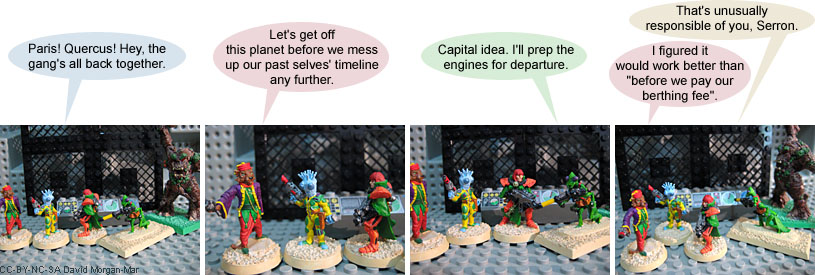
Back in my schooldays, there was a neighbour of ours who used to prep his engine for departure. Every morning he'd start his car, despite the car obviously not wanting to start. It would take several noisy attempts to turn the engine over. Once turned over, it would sputter a few times, and stop. Only for this process to be repeated several times. Then eventually the engine would kick and roar into life, and the neighbour would spend several minutes revving it up and down. Then he'd leave the engine running noisily for about 15 minutes, presumably while he went back inside and had breakfast or something, so that it was nice and warmed up. And finally, about half an hour after this whole spectacle* had begun, he'd rev the engine into spitting, snarling, protesting life, and make his way out on to the street, where the sound of the engine would fade away into the distance for the next 5 minutes.
All before the time I had to get out of bed to prepare for school.
* Is it okay to call something experienced purely aurally a "spectacle"? I'm saying it is.
![[community profile]](https://www.dreamwidth.org/img/silk/identity/community.png) common_nature.crafty.datahoarders.
common_nature.crafty.datahoarders.

Snow White/Seven Dwarves PWP.
nsfwords, the series Daughters of the Apocalypse is now up to date. \o/ You can browse that page to see if you missed anything. 
When the community forgot about her, her ex's other lover didn't.
troisoiseaux suggested a similarity to the work of P. G. Wodehouse, which I definitely also see: it’s easy to imagine a crossover where Wodehouse’s upper class doofuses get into a caper with Runyon’s Broadway gangster idiots, probably ending in a double wedding where an upper class doofus marries a Broadway doll, and a Broadway guy marries Muriel Broadbent. zesty_pinto. It also fills the "Mountains" square in my 3-1-25 card for the Tolkien Bingo Fest. This poem has been sponsored by Anthony Barrette. It belongs to the Rutledge thread of the Polychrome Heroics series. In recent decades, the world has lurched from one crisis to the next: financial collapse, the COVID-19 pandemic, social unrest over police brutality and sexual assault scandals, apocalyptic wildfires and floods, the growing threat of irreversible climate change. But in many corners of the world, existing protections for the people most vulnerable to these crises seem to have been rolled back instead of fortified.
Recently, a group of Canadian researchers found that mothers feel pressured to pick up the slack—the message they receive from popular media, social media, and political discourse is that the solutions to these problems lie in mothers’ individual parenting choices rather than in structural and institutional solutions. The researchers, from Concordia University, conducted four interviews each with 33 first-time mothers in Montreal and Toronto over a two-year period to better understand how they were managing the transition to motherhood. Mothers, they found, feel their responsibilities extend well beyond caregiving and nurturing their children in this era of crisis.
Some of the measures the mothers took to try to address large intractable societal problems ranged from teaching their children about diversity, to foregoing air travel, resisting gender norms, choosing the right diapers, and following plant-based diets. The mothers the researchers interviewed were all cis-gendered women from a range of educational, economic, and national backgrounds, while more than 40 percent identified as belonging to communities of color. The interviews were conducted from the final trimester of pregnancy through the first 18 months postpartum. The researchers published their results in the Journal of Gender Studies.
I spoke with study author Stephanie Paterson, a political science professor at Concordia, about the pressures mothers are facing today, how they’re coping, and what we risk if we continue to expect mothers to solve societal ills.
You write that you were partially motivated to do this study by the question of what constitutes a “good mother” in a moment of crisis and uncertainty. How would you answer that question now?
It’s important to point out that we wanted to understand what society determines is a good mother. In various pockets of literature and in popular media, we find that the good mother is one that invests crazy amounts of time in her family, in her children, in organizational work, and who takes on a managerial role for all things in the family. Children are often depicted as a kind of investment, not necessarily in a monetary sense, but in terms of the need to invest time and effort into sculpting and molding them and making sure that they’re productive citizens. So that’s a big responsibility.
Was there a time in recent history where the expectations of mothers were more realistic?
Ideas of good mothers vary by time and space. For example, previous generations might not have been subject to intensive mothering in the same ways that contemporary mothers are, but they were also expected to stay at home and raise their kids—even though we know that lots of peoples’ experiences deviated from this aspiration. And I think it’s telling that even the countries that rank highest in terms of gender equality, like Iceland and Sweden, women do considerably more unpaid care work than men. This suggests that gender norms are persistent and powerful in shaping expectations of mothers, even in the face of policy regimes that aim for gender equality.
You introduce the concept of “maternal responsibilization.” Can you describe briefly what that means?
Yes, it’s an academic term that comes from post-structuralist thought, particularly the work of Michel Foucault. In very simple terms, it looks at the ways that folks just kind of pick up duties or responsibilities where governments lack them. So we didn’t coin the term, but it was certainly an apt conceptual framing for what we saw—that in the wake of policy frameworks that do very little to actually address collective problems, it was really the mothers in our study who were filling these gaps. We could see this, too, in advice to mothers: “How do you talk to your child about racism?” “How do you talk to your child about financial precarity?” “How do you talk to your child about climate justice and climate change?” There are all these new mom blogs and mothers groups that target moms to really focus on how they parent to ensure that their children carry these values forward. That’s not a bad thing. It’s just a lot for a mom.
With this study, you were looking at a very specific time in a mother’s life.
Our study was about how folks navigate first-time parenthood. Because the relationship for women with the state totally changes once you become a mom. There’s this idea that you’re perpetually possibly pregnant. So young girls and young women are always crafted toward maternity. We really wanted to know what happens when you go from not having children to having children. All of our participants were cis women. Not all of them were in hetero relationships, but they were all cis women. But our interviews were quite open-ended, and we didn’t ask any questions about the current political context. And yet, almost all of the moms mentioned it.
And that surprised you.
That’s what really struck us. We were coding our data, we’re doing this data analysis, we’re in Canada, and we’re hearing about the Brett Kavanaugh hearings. We’re hearing about unrest in Ferguson, Missouri. We’re hearing about Brexit, all of these things. That was even before the pandemic hit. And in the Canadian context, there was a major media personality who was tried for sexual assault and found not guilty. So there was all of this “MeToo” Canadian stuff happening as well. We didn’t ask questions around that, and yet our participants explained how all of these things were impacting their parenting.
Read more: “Parenthood, the Great Moral Gamble”
If we continue like this, placing such profound burdens on mothers, what are the risks to mothers, to children, and to society at large?
I’ve read a bit about increasing mental-health issues among parents, due to intensifying expectations, but this really isn’t my area of expertise. But if this is the case, then we can reasonably assume that mothers will experience more stress, anxiety, and burnout, which can also feed into general health issues and their capacity to care—both for themselves and for others. In addition, we might expect to see demographic change, with the trend continuing toward smaller families and fewer children.
In the study, the mothers of color, including Indigenous mothers, articulated very specific concerns about their children’s safety and futures. What differences did you see across race and class lines?
For the moms of color and Indigenous moms, it was really about safety, while at the same time working to dismantle racist and colonial structures. And for the white parents, it was, “How do I teach my child to not do these things?” We saw similar things with respect to the mothers who were raising children who were assigned female. There was a sense of threat: “How do I protect my female child from sexual assault, while also empowering her to love her body?”
I noticed in the study, one mother said she wanted to raise her daughter to call out bullshit instead of going along. How did these mothers navigate the tension between protecting their children and preparing them to confront difficult realities?
It was very much around instilling in their children—whether they’re female, whether they’re Black, whether they’re Indigenous—the belief that they’re not the problem. Giving them the confidence and the tools to speak out, to push back, the self-confidence in knowing that they have nothing to feel bad about. It wasn’t about altering their behavior to keep them safe. It was more about giving them the confidence and the skills to navigate situations and to speak out against them.
You write in the study that motherhood has been ground zero for addressing societal problems since the 19th century. Why the 19th century, and why has it stuck?
Activists in some of the earliest social reform movements of the 1820s and 1850s in the United States and Britain typically targeted mothers because they were the central figures in the household, and I think that’s stuck because mothers remain that. It’s bound up in gender norms and who’s doing the care work.
In past periods of crisis would you say that the same weight has fallen on mothers, or is this new?
Literature from previous economic crises or periods of economic restructuring suggest that typically mothers have altered their behavior to adjust to those changes. So it might require more at-home care or self-provisioning within households. What I think is different about where we are now is that there is this seemingly perpetual crisis, a normalization of crisis discourse.
Was there anything else that surprised you about the conversations on day-to-day parenting?
It wasn’t really a surprise, because we’re all familiar with the literature on fatherhood and family dynamics, but there was a lot of diversity around partner support in these kinds of activities. Not everybody mentioned their partner, but for those who did, there was quite a variance. Some folks mentioned that they made these decisions around parenting in this particular way with the full support and in collaboration with their partners. Others mentioned, I won’t say hostility, but pushback, or maybe a lack of understanding. So some women were undertaking these practices without the full support of their partners.
What practical measures can societies take to protect mothers? What would policy support actually look like?
There’s no silver bullet, but there are different models of family support that we can think about. Family policy in Canada and the U.S. follows what we call an individual responsibility model. Especially in the province of Quebec, we have a pretty robust social policy regime, so we veer more toward a social democratic government than a liberal democratic one. But you still see elements of this idea that families or children are individual responsibilities, right? We can think about policies that trouble that a little bit: affordable and accessible childcare, legal protections for mothers in the workplace, parental leave. One of the things that we’ve seen from Quebec and Sweden, who have exclusive non-transferable leaves for the other parent, is that the parents, usually the dads who take that leave, also participate more in care and work in the home throughout the duration of the child’s young years. Those kinds of things can redistribute the care work a little bit more equally.
What needs to shift on a cultural level for those policy changes to happen?
We’re talking about major social change. So rethinking how we talk about and teach gender. Showcasing different kinds of families and family forms in educational curricula. We’re talking about very widespread change. There are glimmers of hope, but that kind of systemic change is still a long way off.
I think also changing the way we do policy, focusing on care work and what that entails when we’re designing not just family policy, but social policy, education policy, health policy—that will change how we see the world and expose the amount of care that it takes to build and sustain communities and who’s doing that work.
Part of this story is also the global shift to the right, the normalization of far-right politics, the reassertion of these very retrograde ideas around gender and family, and the very hostile attempts, not just in the U.S., but in Canada and in parts of Europe, to re-institutionalize a very particular family form. And to remove longstanding gains for women and for people of color. It’s quite astounding. All of that provided more sense of threat for the moms that were participating in the study that added to this sense of emergency. Things like, “The ground is slipping away from us, how do we stop this from happening?”
Do you have any plans for follow-ups? What questions do you most want to answer next?
We still have a treasure trove of data that we haven’t published yet. But we’ve talked about, at some point in the future, building on this work to look at not just moms, but moms and their partners. We could only kind of glean how the other parents were reacting from what the study mothers were telling us, and most of them were dads. So it would be great to have a subsequent study that looks at mothers and their partners, because this is a negotiation, even if that negotiating work falls on moms. It would be interesting to see those dynamics play out and to hear more directly from the other parent.
Are you a mom?
Yes.
Did the study change your view of your own mothering at all?
It didn’t change my view. What it made me realize is that I’ve fallen victim to the same things that those moms have. I’m a very proud feminist mom. My partner is male, and he and I had very intense conversations around how we were going to parent our boy. Again, this isn’t bad. We should all care about the society we live in. But it’s this fact that it gets internalized and it becomes the responsibility of moms to raise good kids, to solve social problems. I could see myself in so many of these interviews. It was really eye-opening for a number of reasons, because it really revealed the extent to which moms are at the forefront of sociopolitical change. 
Enjoying Nautilus? Subscribe to our free newsletter.
Lead image: Christin Lola / Shutterstock
When I was younger, autumn’s beauty was uncomplicated. Now I’ve reached the age when autumn is a reminder of mortality. Gloriously turning leaves foreshadow their own fading; cool breezes promise the coming cold. The people I love will die and so will I, whispers the season, and on those bittersweet days I take solace in New England asters: a tall, purple-blossomed perennial found across much of the United States and Canada, blooming in early autumn and remaining in flower until the season’s end, long after other blossoms are a sun-hazed memory.
They’re beautiful, but that’s not the only comfort asters bring. I love them because they ease the passage of bumblebees from this life. By mid-autumn the life cycle of their colonies is nearly finished; the workers who foraged so tirelessly all summer have only a few weeks or days left. So too the male bees who are born in late summer, departing soon after to find queens with whom to mate before spending their own final days alone on the landscape.
For them the asters are a last source of pollen and nectar. The bees who consume them have only a few days left, but at least their stomachs will be full. And when I walk along my driveway on late autumn evenings, I see bumblebees lying atop the asters, sometimes two to a blossom, the petals embracing them as sunlight fades. At night they will sleep there, and some will die when the temperature falls—but at least they will do so on a bed of pollen, their senses and perhaps even their dreams suffused with its smell and taste. I like to think they will be content.
The sleep of bumblebees resembles our own, alternating between a deep slumber and REM.
Now, some people might be reluctant to think that a bee would experience all this in a relatable way. They might catch themselves in that moment of kinship and think they are being too sentimental. Yet research on the minds of bees gives us this permission—not to think of them as tiny humans, necessarily, but to speculate about what they think and feel as they rest on those asters.
Much is known about the brains of bees, whose anatomy and chemistry in many ways resembles our own. Studies of bee behavior show the resemblance is more than superficial. Countless experiments describe their ability to learn and remember; more fundamentally, bees are able to direct their attention selectively—a hallmark of subjective consciousness. They also have emotions: the capacity to experience not only life’s physicality, but its feelings.
This was first explored in two now-classic studies of what are known as cognitive biases: the tendency to view ambiguous situations in an optimistic or pessimistic light. In humans, these biases often reflect our moods. A happy person will see the proverbial glass as half-full, while an unhappy person will see it as half-empty. In honeybees this was tested by teaching them to associate different scents with tastes—one with a sweet solution, another with a bitter brew—and then presenting them with an intermediate odor.

After their colony was shaken, simulating a predator attack, bees hesitated to approach the uncertain smell. In short, they appeared to be in bad moods. Another, similar study of bumblebees found that, having first received a sugary treat, they were more likely to investigate an ambiguous cue. The findings moved bees beyond the raw momentary feeling of pain or pleasure and into a more truly emotional territory, the sort of steady state one could imagine after a good meal.
The findings were made in a laboratory, of course, rather than directly testing whether a bee sipping nectar from an aster is happy. “There is no data, no study, no demonstration,” says Mathieu Lihoreau, an evolutionary biologist who studies insect cognition at the University of Toulouse in France, and the author of What Do Bees Think About? “But it’s very likely.” Not only should bumblebees take pleasure in their aster meals, Lihoreau says, but the blossoms offer the comfort of familiarity. They know the flowers well. “If you are in a familiar place, and you know all the stimuli, then we as humans feel better,” he says. Though it’s too soon to “say with certainty that they feel the same, it’s a possibility.” And not only are the asters familiar; they are warm. Over the course of a day their blossoms absorb the October sun’s rays, raising their temperature above the surrounding air by several degrees. Bumblebees, whose bodies may be even warmer than our own, generate their own heat by vibrating their flight muscles. The extra heat should be welcome on a cool evening.
As night falls, the flowers’ petals close around the bumblebees, offering the comfort of a warm embrace—perhaps intimating the press of bodies in their colony—as they fall asleep. For insects do in fact sleep, and the sleep of bumblebees also resembles our own, alternating between a deep slumber and a shallower, more mentally active state that seems akin to REM sleep, with our rapid eye movements replaced by a twitching of antennae. Which poses the question: Do those sleeping bees dream?
In humans, dreams occur in both deep and REM sleep, though it’s the latter that we recall most vividly. The dreams are a manifestation of what occurs in our brains at these times: Deep sleep seems to be a period of memory consolidation, when a brain replays events from the day, saving the most salient information and pruning what can be discarded.
What might a bumblebee dream of? Perhaps the flowers they have visited, the path to get there.
Researchers have explored the deep-sleep state of honeybees, using an odor associated with a training task to enhance the sleeping insects’ memories of what they had learned. When tested upon waking, the bees’ recall was boosted in comparison to bees who did not receive that odor prompt. The same phenomenon is seen in similar experiments with humans, leading the researchers to conclude that deep sleep for bees is, as it is for us, a time for processing memories.
“In deep sleep, their muscles are fully relaxed and their antennae and body sink to the ground,” says Hanna Zwaka, a neurobiologist at the Leibniz Institute for Neurobiology in Germany, who led the study of sleeping honeybees. “What does that have to do with dreaming? We believe that some of our dreaming could reflect similar reactivations.”
Less is known about the active sleep state in bees, but one theory holds that REM sleep—its dream-saturated mammalian analogue—occurs while a brain optimizes its models of the world. Rather than reviewing a day’s memories, the REM-sleeping brain runs simulations reassembled from previous experiences, preparing itself to better navigate an unpredictable world upon waking. Active sleep has not been studied in bees, but it has been documented in fruit flies.
“The brain looks like it’s still awake, but the fly is unresponsive to the outside world,” says Bruno van Swinderen, a neurobiologist at the University of Queensland in Australia who has studied sleep and cognition in flies. “They’re in some kind of altered state that is basically similar to what we think is happening in REM sleep.” The same likely occurs in bees, he says.
And what might a bumblebee dream of? The moments of their life, perhaps: the flowers they have visited, their taste and smell. The paths they followed to get there. Other bees they have known. Zwaka thinks bees “might dream about anything they have learned—colors, odors, or places.” Perhaps, says Zwaka, my bumblebees atop their asters dream of their warm home.
I wonder whether, much as our own dreams may incorporate some stimulus from the external world—a song drifting through an open window, mysteriously woven into the dreamtime narrative—so might the same happen to a bee. The warm aster blossom embrace, the full stomach, every sense pervaded by the flowers that are so central to their existence: How could a dream in such conditions be anything but beautiful?
Late in autumn, when only a few asters remain in flower and the days feel suddenly short, I walk by them each evening and morning, looking for bees and hoping for just one more day before the hard frost that will bring their final sleep. Of course, the days will run out; rather than being revived by the sun, they will fall from the flowers. Foreknowledge and its sadness are inescapable. But at least there is this small peace, this kind departure for the bumblebees whose efforts have helped the world bloom.
Not many animals die so well. Most will die of disease, injury, starvation, or predation. And as much as we want to believe that humans have exempted ourselves from this cruel fact of life, our own deaths are frequently protracted and painful. To see an aster, though, is to know that at least someone is departing with grace. To tend asters is a gesture of hope, a small and profound act of benevolence.
It is winter now. The asters have turned brown and dormant. Bumblebee queens are dormant too, nestled in the burrows from which they will emerge in tandem with spring’s first flowers. The blossoms and their bees are a memory and an anticipation, but the days are getting longer. Soon it will be time for planting.
Lead image: Brandon Keim
